What Got Us Here, Where We Stand, and What You Can Still Do

To the hardworking men and women across this country who still believe in personal responsibility paired with inalienable rights, who value the simple principle of live and let live, and who have watched both political parties drive the nation and much of the world into deeper trouble: this letter is for you.
You are not alone in sensing that something fundamental has gone wrong. For years, the dominant voices on both sides have offered little more than partisan noise, blame-shifting, and policies that expand centralized power while eroding the practical ability of ordinary people to provide for themselves and their families. The result is a system that feels increasingly fragile, where headlines often paint one picture and daily life paints another. It is much more fragile than most know and very briefly I will highlight what got us here first.
What Got Us Here
The challenges we face did not appear overnight, and they are not the fault of one party alone. Both sides have contributed to decades of unsustainable choices: endless foreign interventions that overextend our resources and credibility, domestic policies that encouraged dependency over self-reliance, an economy built on debt and just-in-time supply chains that leave little margin when disruptions occur, and a growing disconnect between governing elites and the people they claim to serve.
Recent actions have accelerated these fractures. Operations such as the January 2026 capture of Venezuela’s leadership, aggressive rhetoric toward Greenland, and saber-rattling with Cuba have been widely viewed abroad as erratic exercises of power. These moves have strained alliances, hastened interest in alternative international arrangements, and reinforced perceptions that the United States is a declining hegemon more focused on control than steady leadership. Our allies and even our adversaries no longer believe we can keep our word or deliver on promises to pay our debts. That alone is enough to cause global challenges but an economic self-inflicted wound caused by the ongoing conflict involving Iran, ensure that our choices and actions have contributed to a faster shift toward a more fragmented, multipolar world.
At home in the United States, we have built systems on fragile foundations. We have offshored much of our industry and manufacturing while converting our economy into a service economy that is being replaced by artificial intelligence. We have expanded into areas geographically and have failed to build in resiliency or account for cyclical minimums or maximums in climate on a long term scale. Agriculture in the arid Southwest, for example, has depended on massive water transfers and hydroelectric power from the Colorado River system. That system is now under severe stress and is just one critical part of American infrastructure that is near collapse.
The Reality We Face Right Now
Current assessments as of mid-July 2026 show several compounding pressures arriving at once.
The conflict involving Iran has resumed with direct attacks on tankers in the Strait of Hormuz, causing crew casualties and disrupting shipping. This critical chokepoint handles a significant share of global oil and gas. Even with attempts at temporary openings, physical damage, logistics lags, and renewed threats have undermined recovery. Oil prices remain volatile, and refined product supplies face mismatches in what the refineries are set up for even as raw crude production numbers look strong on paper. The lack of sour or sulfur rich gulf oil is bringing global shortages of diesel and jet fuel even in our own country sooner than is being admitted to.
Closer to home, Lake Mead stands at approximately 1,042–1,044 feet (roughly 27–29% of capacity) and continues dropping at a rate of a foot or more per week. Within roughly four weeks it is projected to approach the 1,038-foot threshold that triggers deeper shortage measures. Hoover Dam’s ability to generate electricity is already constrained and faces further losses. This directly affects water deliveries: Arizona faces potential cuts up to 33% (impacting the Central Arizona Project and agriculture), Nevada around 7%, and California agricultural districts have already seen federal emergency actions targeting production in key growing areas. The ripple effects on national food supply and prices are real and growing. If the situation continues without immediate significant relief if the form of rain, we are likely to see power production and water deliveries to the area drastically reduced and, in some cases, eliminated completely in order to preserve the infrastructure of the two dams at risk.
At the same time, broader economic signals are misleading. Headlines about record stock levels or increased spending often mask that much of that spending is on necessities amid persistent inflation, not on productive growth or rising living standards. The top continues to improve their situation while the average citizen feels like they are drowning. Many working families report being physically, mentally, or financially exhausted; with “nothing left to give.” Crop outlooks for corn, soy, and wheat already show elevated losses from heat and drought stress, and these pressures are compounding with the Southwest agricultural cuts. Lack of fertilizer and significantly increased diesel prices are putting further strain on farmers and ranchers. The gap between insulated elites and ordinary citizens is becoming more visible, echoing historical patterns seen before major periods of social and economic strain.
Public discussion on platforms and in communities reflects this: concerns about grid reliability and blackouts, water and power reliability in affected regions, food price and supply stability, and frustration that systems seem to be failing regular people while those at the top remain largely unaffected. A full two out of three families find food unaffordable while televisions and alcohol remain remarkably affordable. When those become more expensive and the food more scarce in the coming weeks and months irritability and frustration may reach a boiling point when the heat of the record El Niño exacerbates things across the nation.
These are not isolated problems. They are connected: energy chokepoints, water and power limits on food production, misleading financial narratives, and a loss of trust in institutions that once provided a sense of stability. The old post-World War II model of globally optimized, debt-fueled abundance is shedding its leaves rapidly. Many describe this as a season of profound reordering, some the season of the shedding fig tree; where old assumptions no longer hold and new realities must be faced.
What This Means for Ordinary People
For those in rural and independent-minded areas, the situation brings both greater exposure to national ripple effects (higher food and fuel costs, potential supply gaps) and a structural advantage: more space to build real resilience through local production, stored resources, and trusted neighbor networks. Prepared households are already visible in many communities. That visibility may come at a price if proper networks are not cultivated now and your immediate neighbors are your immediate buffer. A neighbor who is not hungry is unlikely to try and kick down your door for food. Learn to work with difficult people in difficult situations. Be prepared to stand up against those that want to subjugate you and rob you of your efforts.
For those in urban and suburban settings, the vulnerabilities are often higher; greater dependence on distant supply chains, apartment living with limited storage or growing space, and higher risk during grid or delivery disruptions. The same pressures exist, but the tools and margins differ. Pretending otherwise helps no one. No man is an island especially in a densely populated area. Get to know your neighbors and make a point to know the difference between those who are selfish and those who are willing to work together.
In both cases, the coming period is likely to feature more uncertainty, higher costs for essentials, and uneven regional impacts than most of us have seen in our lifetimes. Technocratic systems may attempt to expand control in the resulting chaos, offering security in exchange for greater oversight of daily life. A hungry or desperate person is often willing to trade chains and servitude for perceived security. That trade-off deserves clear-eyed scrutiny. I am not the best one to speak about urban or city preparedness but there are some general things that everyone can do.
What You Can Still Do
The most practical response is not panic and not passivity. It is deliberate preparation grounded in timeless principles and realistic assessment of your own circumstances. Don’t focus on what you can’t do, find things that you can do to improve your situation.
First, educate yourself on the foundational ideas that built this country’s strongest traditions: limited and accountable government, inalienable rights paired with personal responsibility, skepticism toward concentrated power, and the understanding that healthy communities rest on virtuous, self-reliant citizens rather than distant bureaucracies. You may think they are outdated but I can assure you the principles are timeless and made for moments like these. The wisdom of our Founding Fathers are not partisan talking points; they are practical safeguards against the very overreach and fragility we now see.
Second, adopt a self-sufficiency mindset where you live. This does not require perfection or isolation. It means starting where you are and building margin. Even an apartment dweller can grow herbs, berries, root vegetables, and other things in containers and hanging or wall gardens. Ensure you have a staple supply of rice, beans, flour, salt, and the basic idea of how to assemble edible food for yourself and alternate ways to prepare things. Develop a shelf-stable food supply for when things are not available. First 72 hours, then a week, then two, then a month, and then three months. Build up where you can and don’t forget water purification and protection for you and your family. A baseball bat is better than having nothing.
– If you are rural or have access to land: Take inventory of fuel, feed, seed, water treatment supplies, and stored food. Rotate and stabilize what you have. Expand garden output for storable crops and season extension. Make pragmatic decisions about livestock based on feed availability. Quietly check in with trusted neighbors about mutual awareness and potential resource sharing (equipment, skills, labor) without advertising capabilities. Maintain operational security; desperate people notice prepared properties once visible shortages appear. When gas lines appear stop mowing the lawn, when electricity goes out turn off the lights at night if you have a back up and don’t want to stick out like a sore thumb.
– If you are in urban or suburban surroundings: Assess your actual situation honestly. What storage is realistic in your living space? Can you access community gardens, tool libraries, or skill-sharing groups? Build emergency supplies of water, non-perishable food, basic medical items, and backup power for critical needs (phones, medical devices, lighting). Develop relationships with a small circle of reliable people who live within walking distance. Learn practical skills (food preservation, basic repair, first aid) that reduce dependence on systems that may falter. Become a valuable member of a neighborhood team that is invaluable. Consider whether your current location remains viable long-term or whether modest relocation or dual-resource planning makes sense.
In both settings, use the technology and tools available today (information networks, online learning, efficient equipment) while deliberately building analog backups and local relationships. Tomorrow is more uncertain than it has been in most of our lifetimes; over-reliance on any single system is unwise.
Third, stay grounded. For many, this includes prayer, reflection on enduring values, and focus on character and family. Crises test not only supplies but also how we treat one another. Local mutual aid among trusted people remains one of the most effective forms of resilience. Bury the hatchet as they say and mend fences where they need to be mended.
Fourth, stay out of the way of engineered chaos. Avoid being drawn into partisan traps or online outrage cycles designed to divide neighbors and distract from practical realities. Do not get caught in systems that promise safety while steadily trading away independence. Vigilance means watching real indicators (water levels, fuel availability, crop reports, local conditions) rather than relying solely on filtered narratives.
A Final Word
The old system is breaking in visible ways. That does not mean collapse is inevitable everywhere or that nothing can be done. Prepared individuals and small communities who act now (while options are still relatively open) can position themselves to weather the coming period with greater stability and dignity than those who wait for distant solutions. We still have information available on food storage, practical preparation, self-sufficiency, resilience, for those who are interested. We can wish we had a President who dealt with domestic issues with the same urgency as he does of those from other nations
The window for deliberate preparation is open but closing. Use it.
Educate yourself. Build real capability where you live. Strengthen trusted local ties. Hold fast to the principles of responsibility and rights that have served free people well. Stay vigilant, eyes open, and do not panic.
What you preserve and build may help anchor not only your own household but also those around you who are willing to adapt. When grocery stores run short, and fuel stations struggle to keep diesel in, and the trains and trucks that move it all start to run empty it is not the end. Humanity is incredibly resilient and will adapt, retool, and bring things back online. It will take some time to change our refineries to adapt to the oil we produce and reprioritize limited farmland over data centers. Many of the facilities that produce the world of things in Asia will shutter and eventually manufacturing will return to our nation. All these things are possible if we prepare a little more and become the peacemakers in our community in what capacity we can.
The storm is real. So is the capacity of ordinary, responsible people to meet it.
Stay steady. God bless all those that stand for Liberty and freedom.
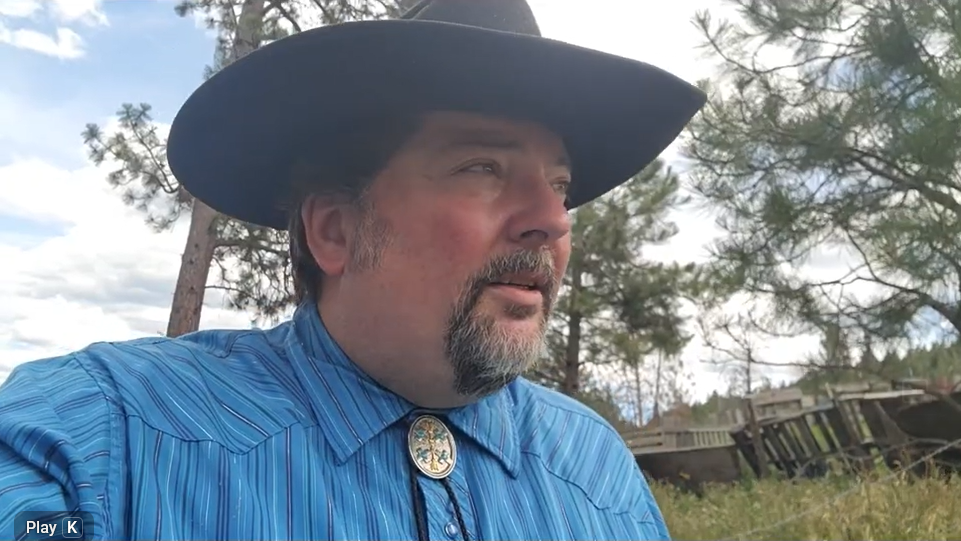
Lonny Ray Williams
Last National Chairman, Independent American Party (2022–2024) President, Independent American Patriots Private Membership Association (2024–2026)