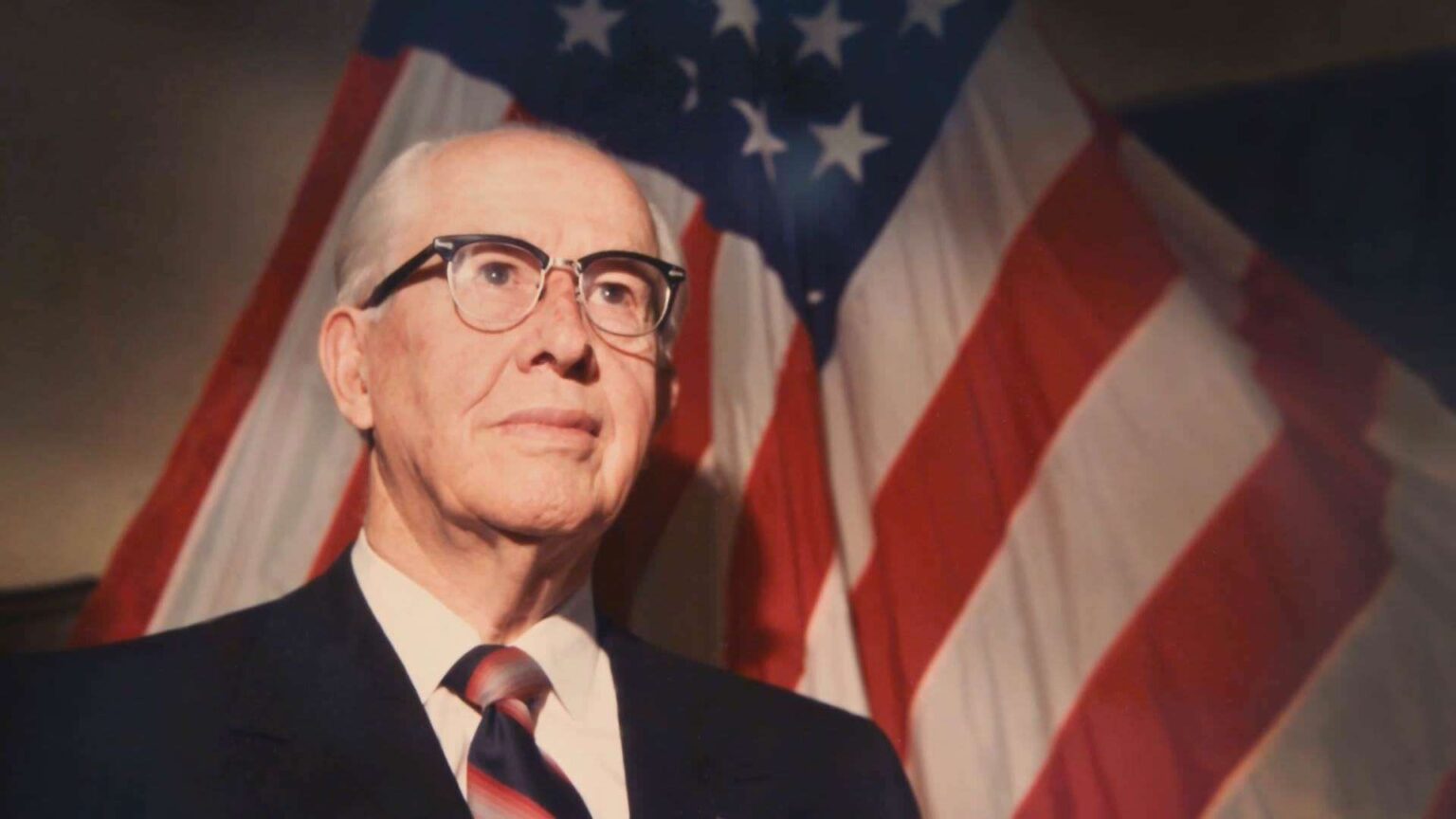
Robert Yates: A Life of Principled Resistance
The Antifederalist Patriot Who Championed Local Independence

Born on January 27, 1738, in Schenectady, New York, Robert Yates emerged as a quintessential Founding Father whose life embodied the rugged self-reliance of early America. As the eldest of twelve children in a merchant family—his father, Joseph Yates, was an Albany-born Schenectady trader dealing in goods amid the colonial frontier—Yates grew up in an environment where commerce and survival intertwined. His mother, Maria Dunbar Yates, came from a garrison soldier’s lineage, instilling a sense of frontier grit. This merchant heritage likely influenced Yates’s practical worldview, though he himself pivoted toward professional pursuits rather than direct trade. He received a classical education in New York City, learning Latin and Greek, before apprenticing as a surveyor—a skill that demanded self-sufficiency in mapping untamed lands. By his teens, Yates was producing detailed surveys, including the first civilian map of Albany in 1770, which supported local development and land claims essential to colonial homesteaders and small-scale industries.
Yates’s career trajectory reflected the cottage industry ethos of the era: blending skilled trades with public service. After clerking under William Livingston (future New Jersey governor and signer of the Constitution), he was licensed to practice law in 1760. Surveying supplemented his legal income, allowing him to navigate the economic uncertainties of pre-Revolutionary America without full reliance on patronage. He wasn’t a merchant in the traditional sense—unlike his father—but his mapping work facilitated commerce and land settlement, akin to enabling the “cottage industries” of farming, milling, and artisan trades that defined self-sufficient colonial communities. During the Revolution, Yates’s contributions amplified this: Joining the Albany Committee of Correspondence in 1774, he served as secretary to the Board of Indian Commissioners, traveling frontiers and negotiating with Native tribes—experiences that honed survival skills and underscored the value of local autonomy over distant British control.
As a delegate to all four New York Provincial Congresses (1775-1777), Yates helped draft the state’s first constitution, emphasizing individual liberties and state sovereignty—principles that would define his Antifederalist stance. Appointed to the New York Supreme Court in 1777, he rose to Chief Justice in 1790, serving until retirement in 1798 at age 60. His judicial role involved interpreting laws in ways that protected local rights, often against overreach. At the 1787 Constitutional Convention, Yates and fellow delegate John Lansing Jr. walked out in protest, viewing the proceedings as an unauthorized power grab. His subsequent essays as “Brutus” (and possibly “Sydney”) warned of federal tyranny, drawing from classical republics to argue for decentralized power—echoing the self-reliant spirit of homesteaders who built America from the ground up.
Personal life details paint Yates as a family man whose principles mirrored IAP ideals. In 1765, he married Jannatte “Jane” Van Ness (1741-1818), sister to Judge Peter Van Ness, connecting him to a network of influential yet grounded figures (including future congressmen and governors like John Peter Van Ness). They settled in Albany, raising six children amid the Revolution’s chaos. Yates’s home life emphasized stability and independence: As a surveyor and judge, he modeled providing for one’s family through skilled labor and ethical governance, avoiding the elite corruption he critiqued. His extended family—uncles like Abraham Yates Jr. (Albany mayor and fellow Antifederalist), cousins in Congress—reinforced a legacy of patriotic dissent. Yates died on September 9, 1801, in Albany, buried initially at St. Peter’s Cemetery before reinterment at Albany Rural Cemetery. No scandals or extravagance marked his life; instead, it was one of quiet resolve, running unsuccessfully for governor in 1789 and 1795 as an Antifederalist candidate, backed by those wary of centralized elites.
What makes Yates’s principles stand out for the new IAP? His core belief—that vast republics breed corruption and erode local freedoms—directly relates to modern fights against federal bureaucracies stifling homesteading, PMA structures, and crisis preparedness. Yates foresaw how centralized power would burden citizens with taxes and regulations, much like today’s IRS audits on patriots or EPA overreach on land use. His advocacy for states’ rights as a bulwark against tyranny aligns with IAP’s emphasis on sovereignty: Just as he pushed for a Bill of Rights to protect individuals, IAP champions self-reliance in financial strategies (e.g., VA refinances) and community resilience. Yates’s frontier surveying ties to self-sufficiency—mapping lands for independent settlers—mirrors IAP’s permaculture and bug-out planning. He wasn’t a merchant per se, but his life’s work enabled the cottage economies of early America, where families thrived without federal handouts. In an era of surveillance and executive fiat, Yates reminds us: True patriotism is resisting consolidation to preserve liberty for the common man.
Sources for Further Reading: Wikipedia entry on Robert Yates; National Archives Founding Fathers bio; New York Historical Society profile; “The Antifederalist Papers” for his Brutus essays.